Don’t want to read this? Here’s my quick recommendation:
Purchase a j-hook/unibead type, fully printed, heavy gauge(25 or heavier) liner making absolutely sure it’s manufactured in the US or Canada
When having me change the liner in your above ground pool, I have you order and buy the liner. This article will help you buy the correct liner for your pool.
Best Advice I Can Give: “Make sure your replacement liner is made in the USA or Canada only”!
Liners made overseas cost less, but don’t last nearly as long as ones made in North America. And some Chinese-made liners are very poorly made, so they don’t fit very well.
Measuring your pool for the correct liner size
Note: If you have access to the original sale or paperwork to your pool, find out the pool size that way.
1 For round-shaped pools, measure across the pool from at least two different spots
Using a tape measure, measure directly across the pool from the inside of the pool’s wall to the inside of the pool’s wall.
This measurement will not be exact but will be close to a specific foot size. Example: If you get a measurement of 23′ 11″, then the pool size is a 24′ round.
The more common round-shaped above ground pool sizes are 12ft, 15ft, 18ft, 21ft, 24ft, 27ft, 30ft, and 33ft.
2 For oval-shaped pools, measure both the length and width of the pool
Using a tape measure, measure the longest part of the oval from the inside of the pool’s wall to the inside of the pool’s wall.
Now measure the width of the pool from the inside of the pool’s wall to the inside of the pool’s wall. Note: Oval pools have scallop-shaped straight sides. This means that you will get two different measurements along the straight sides. To get the most accurate size reading, measure across from upright/buttress to upright/buttress. This will give you the shortest measurement and usually the most accurate for the pool’s size.
This measurement will not be exact but will be close to a specific foot size. Example: If you get a measurement of 29′ 8″ on the long way and 15’2″ on the short side of the pool, then the pool size is a 15×30 oaval.
The most common above ground pool oval sizes are 12×24, 15×24, 15×26, 15×30, 18×33, 21×42, and 21×43.
3 Measure the pool’s height
The height of an above ground pool is based on the height of the actual wall (and not the frame), so you will need to measure the actual wall of the pool.
From the outside of the pool wall, dig down into the ground some to find the pool’s bottom track. Once found, measure up to the top of the wall only. To do this, you will have to measure from under the top rails.
Another way to get the pool’s height is to measure one of the uprights. You must find the bottom of the upright and only measure up to the top of the upright (and not add for any top/bottom connector plates or caps. ONLY THE ACTUAL UPRIGHT.
This measurement will not be exact but will be close to a specific foot size. Example: If you get a measurement of 53 and a half inches, then the pool height will be 54inch.
There are three common above ground pool wall heights. They are 48″, 52″, and 54″
Which liner to order for your above ground pool
When choosing a liner for your above ground pool, there are four things to consider
1 Liner type
There are 3 types of liners- Overlap, j-hook, and beaded. I strongly recommend you get a j-hook type of liner. NOTE: A unibead liner has a j-hook attached to it, so you can get a unibead liner too.
2 Liner weight
The heavier the liner, the more durable and longer lasting. Liners come described as 20, 25, 30, 35. and 40 mil/gauge. I recommend you get a 25 or higher
3 Liner pattern or solid blue
When looking for an liner, you will come across several prints, half printed/half solid blue, and solid blue only. I recommend you get a fully printed liner. Based on my 40 years of liner observation, printed liners generally last longer the solid blue ones. This is why I recommend printed.
4 Where the liner is made
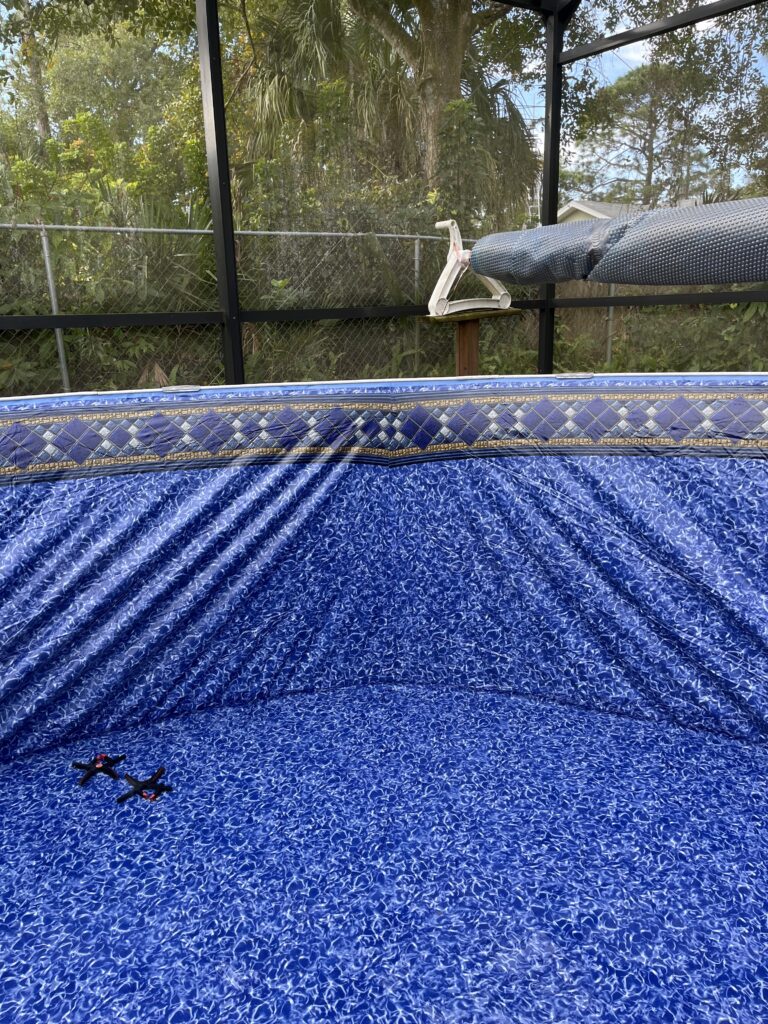
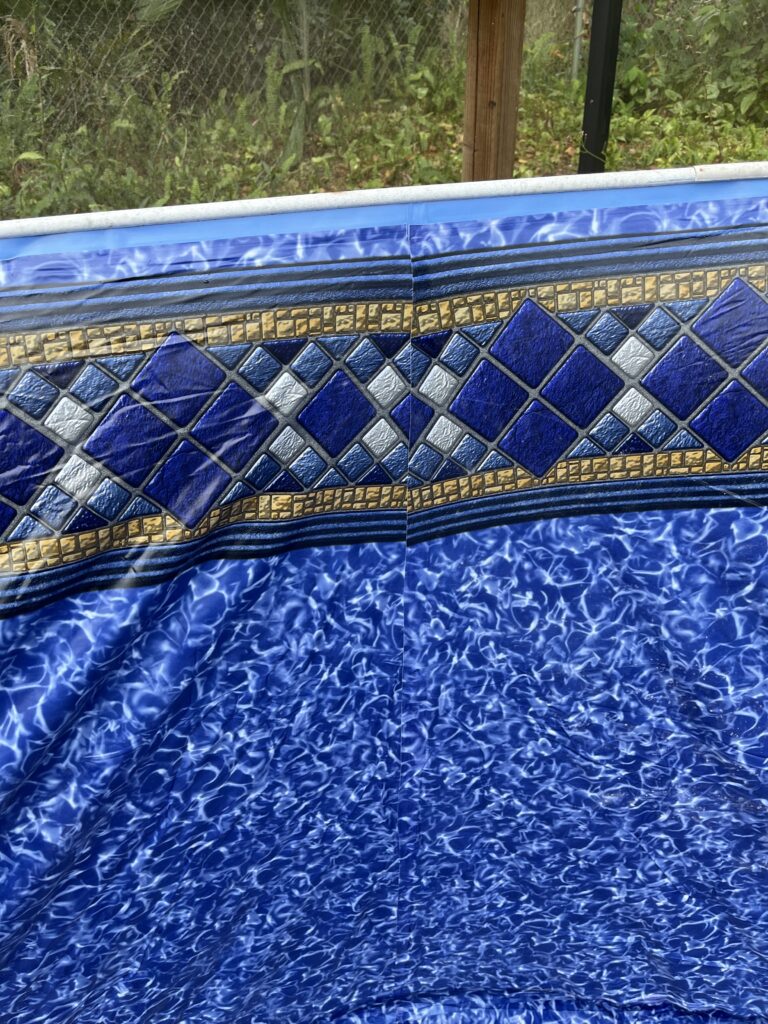
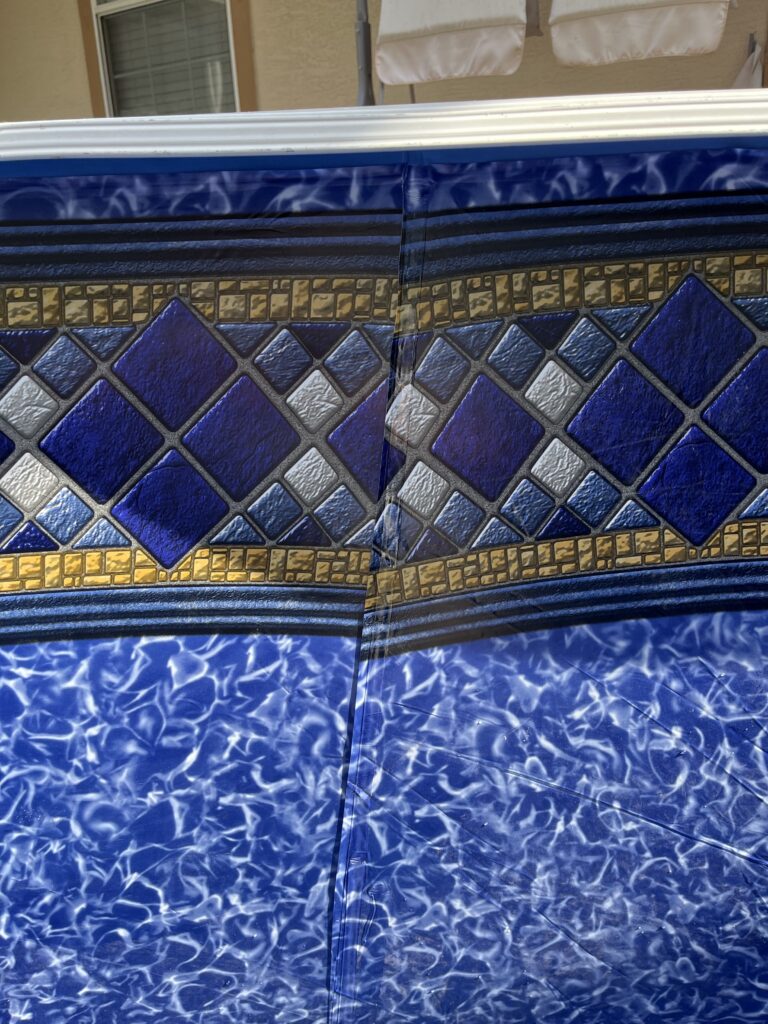
I cannot recommend this enough. Get a liner that is made in the USA or Canada. This is not me being patriotic. Liners made overseas, although costing less, do not last as long and some don’t fit in the pool very well.
Retailers that sell liners know that chinese-made liners are undesirable, so they will hide info on where the liner is made! Make absolutely sure that the liner is made in North America, or save some money on the liner, but then plan on replacing it in a year or two.
Additional things you may need to get for your liner changeout
In most cases when I do a liner change, I will replace some things that need replacing for no extra cost. Occasionally though, some pools need some new or extra things for the changeout.
1 New skimmer – Most pools don’t need a new skimmer, but if your pool is older or has some cracks around the skimmer or it was leaking badly, then it may be a good idea to get a new one. The during a liner change is the best time to replace it.
2 New liner guard – Liner guards have become quite common, so your pool may already have one. About 50% of them can be reused and the other half need replacing.
3 Foam coving – Foam coving is another popular add-on for above ground pools. In most cases, your existing foam coving won’t need replacing, but occasionally they will loose too much shape and need to be replaced.
4 Wall foam – This is only needed if the inside of your pool’s wall is too rusty. You won’t know this until after the liner is reomved, so wait on buying wall foam until you know you need it.